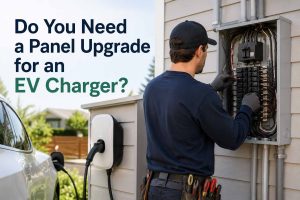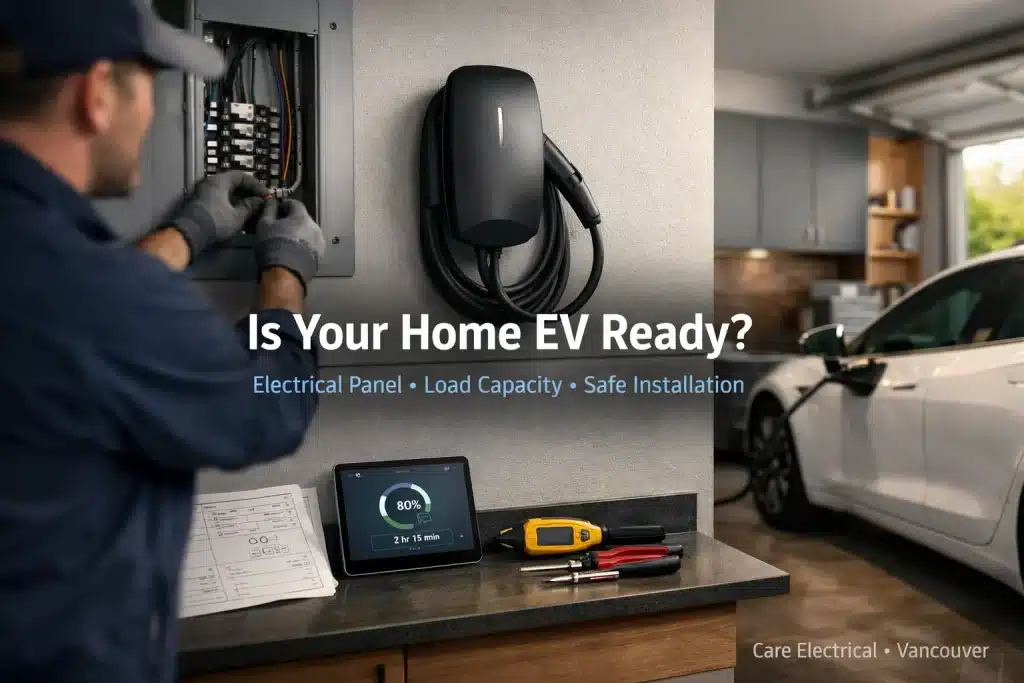
Electric vehicles are no longer “the future.” They’re here, and honestly, they’re everywhere across Vancouver, North Vancouver, West Vancouver, and Burnaby. You see them in driveways, condo parking garages, and even at grocery stores.
But here’s the real question most homeowners don’t ask early enough:
Is your home actually ready for an EV charger?
Because installing a charger isn’t just plugging something into the wall. It’s about meeting the right home EV charger requirements, ensuring your electrical system can handle the load, and doing so safely, legally, and efficiently.
Let’s break it all down. Think of this as your complete pre-installation checklist, written from real-world experience, not theory.
Understanding Home EV Charger Requirements in Vancouver
Before anything else, you need to understand what home EV charger requirements actually mean.
It’s not just about buying a charger. It’s about:
- Electrical capacity
- Panel space
- Wiring infrastructure
- Local code compliance
- Installation environment
In cities like Vancouver and Burnaby, home EV charger requirements are also influenced by:
- BC electrical codes
- Permit requirements
- Utility capacity (BC Hydro considerations)
Let’s be real. Many homes weren’t originally built with EV charging in mind. So meeting modern home EV charger requirements often means upgrades.
Why Not Every Home Is Immediately EV-Ready
Many homeowners assume they’re ready.
They’re not.
Here’s what typically happens:
Someone buys an EV → orders a charger → calls an electrician → gets told they need a panel upgrade.
And suddenly, a simple install becomes a bigger project.
That’s because home EV charger requirements depend heavily on your existing electrical system.
Older homes in North Vancouver or West Vancouver, especially, may have:
- 100A panels instead of 200A
- Limited breaker space
- Outdated wiring
These factors directly affect whether you meet home EV charger requirements.
Level 1 vs Level 2 Chargers: What You Actually Need
What Is a Level 1 Charger?
- Uses standard 120V outlet
- Very slow charging
- Adds ~5–8 km per hour
Technically, it meets basic home EV charger requirements, but honestly, it’s not practical in the long term.
What Is a Level 2 Charger?
- Uses 240V connection
- Much faster charging
- Adds ~30–60 km per hour
This is where most homeowners land.
If you’re serious about EV ownership, you’ll want to explore
Level 2 EV charger benefits.
And yes, Level 2 setups have stricter home EV charger requirements, especially around:
- Dedicated circuits
- Load calculations
- Breaker sizing
Electrical Panel Capacity: The First Thing to Check
Let’s get straight to the biggest factor:
Your electrical panel.
If your panel can’t handle the load, nothing else matters.
Typical Requirements
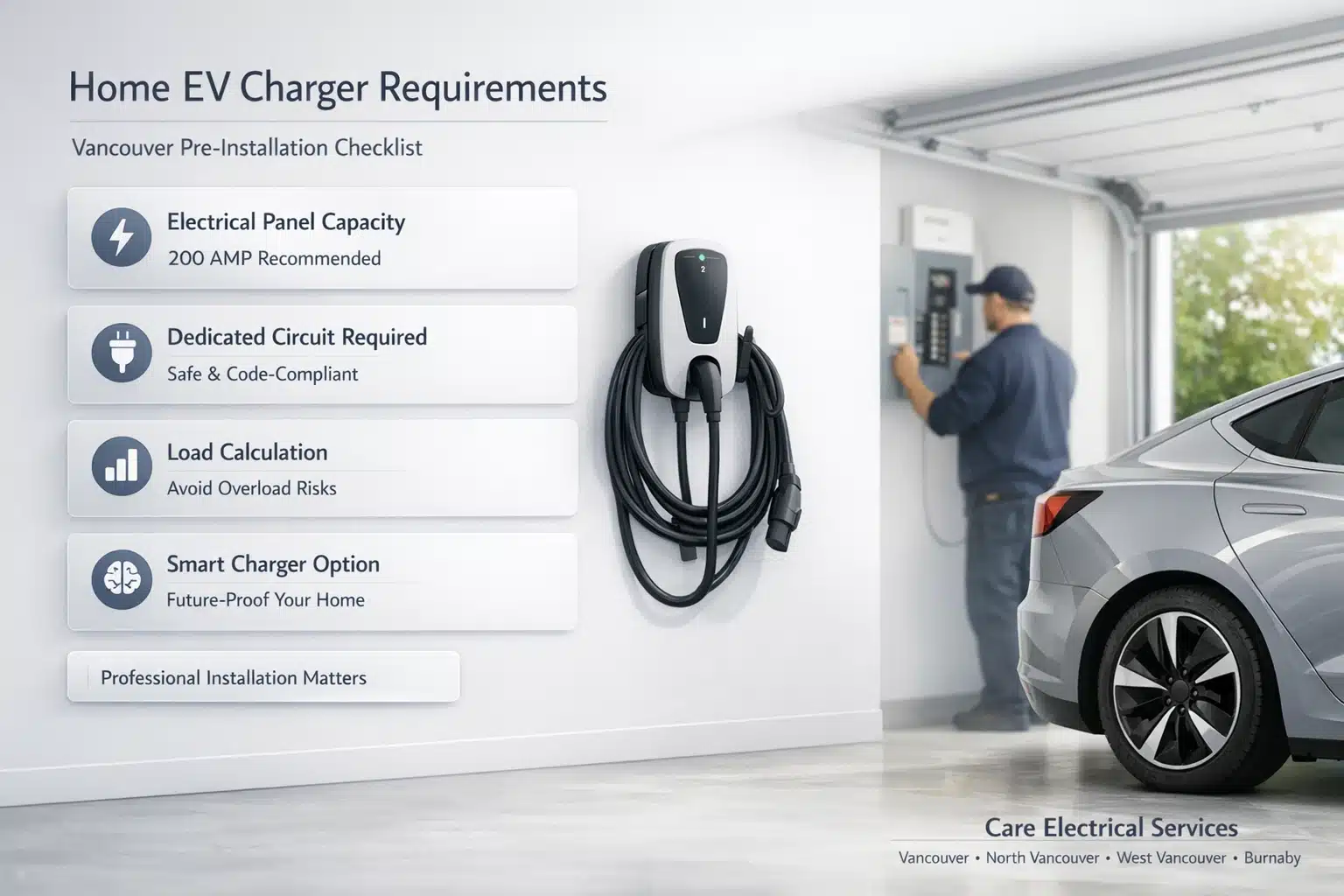
To meet modern home EV charger requirements, your home should ideally have:
- 200 amp service
- Available breaker space
- Proper load distribution
If not?
You may need a panel upgrade.
Real-Life Scenario
A homeowner in Burnaby recently asked for a charger to be installed.
Everything looked fine at first glance.
But after the load calculation?
The panel was already maxed out.
Result: Panel upgrade required before meeting home EV charger requirements.
Load Calculation: The Hidden Step Most People Miss
This is where a licensed electrician really matters.
A load calculation determines:
- How much electricity does your home already use
- Whether your system can safely handle an EV charger
Without this step, you can’t confirm compliance with home EV charger requirements.
Why It Matters
Skipping load calculation is risky.
You could end up with:
- Tripped breakers
- Overheating wires
- Electrical hazards
If you’re wondering
How much power does an EV charger use
This is exactly where that question becomes critical.
Do You Need a Panel Upgrade?
Sometimes yes. Sometimes no.
It depends entirely on your current system.
Signs You Might Need One
- 100A service
- No breaker space
- Frequent breaker trips
- Older electrical infrastructure
If any of these apply, you likely don’t meet modern home EV charger requirements.
Upgrade Benefits
Upgrading your panel:
- Future-proofs your home
- Supports multiple EVs
- Improves overall safety
Honestly, many homeowners end up upgrading anyway, so it’s not a wasted investment.
Dedicated Circuit Requirements for EV Chargers
One of the core requirements for home EV chargers is a dedicated circuit.
That means:
- Your charger runs on its own breaker
- No sharing with other appliances
Why Dedicated Circuits Matter
Let’s be real. EV chargers draw a lot of power.
Sharing circuits can cause:
- Overloads
- Safety risks
- Code violations
That’s why home EV charger requirements clearly mandate dedicated circuits for Level 2 chargers.
Installation Location: Garage, Driveway, or Outdoor?
Where you install your charger matters more than people think.
Common Locations
- Garage wall
- Exterior wall
- Driveway pedestal
Each option has different home EV charger requirements, especially around:
- Weather protection
- Cable routing
- Mounting standards
Outdoor Installations
Outdoor setups require:
- Weatherproof enclosures
- Proper conduit
- GFCI protection
Again, all part of meeting home EV charger requirements.
Permits and Electrical Code Compliance in BC
This is not optional.
In Vancouver and the surrounding areas, all installations must meet:
- Canadian Electrical Code
- Local municipal regulations
Why Permits Matter
Skipping permits might seem easier, but:
- It voids insurance
- It risks safety
- It can create resale issues
A licensed electrician ensures your setup meets all legal requirements for home EV chargers.
Smart Chargers and Future-Proofing Your Home
Technology is evolving fast.
Modern Home EV Charging Systems now include:
- Smart load management
- App control
- Energy monitoring
These systems help meet advanced home EV charger requirements, especially in homes with limited capacity.
EV Energy Management Systems (EVEMS)
If your panel is limited, EVEMS can:
- Balance power usage
- Avoid upgrades
- Optimize charging
This is a smart workaround when full upgrades aren’t feasible.
Condo vs Single-Family Homes: Different Requirements
Not all homes are the same.
Single-Family Homes
- Easier installations
- More flexibility
- Direct panel access
Condos and Townhomes
- Shared electrical systems
- Strata approval required
- Additional home EV charger requirements
This is where things can get complex.
Choosing the Right Electrician
This is not a DIY project.
You need a licensed professional who understands:
- Local codes
- Load calculations
- EV-specific systems
If you’re searching for an: Electrician near me
Make sure they have real EV installation experience.
Local Expertise Matters
For example:
- EV charger installations in North Vancouver may face terrain and older infrastructure challenges
- EV chargers in West Vancouver often involve higher-end homes with complex systems
Working with an experienced: Electrician West Vancouver
makes a huge difference.
Common Mistakes Homeowners Make
Let’s go through a few real ones.
1. Assuming Any Outlet Will Work
It won’t.
Meeting home EV charger requirements means proper voltage and circuit design.
2. Ignoring Future Needs
Planning for one EV?
What about two later?
Smart homeowners design beyond current home EV charger requirements.
3. Choosing the Cheapest Option
Cheap installs often ignore critical home EV charger requirements.
That leads to:
- Safety issues
- Expensive fixes later
Cost Considerations: What to Expect
Let’s talk numbers.
Typical Costs in Vancouver
- Basic installation: $800 – $2,000
- Panel upgrade: $2,000 – $5,000+
- Complex installs: higher
Costs vary depending on how well your home already meets EV charger requirements.
Step-by-Step Pre-Installation Checklist
Here’s your simplified checklist:
Step 1: Evaluate Electrical Panel
Check if you meet base home EV charger requirements.
Step 2: Perform Load Calculation
Determine available capacity
Step 3: Choose Charger Type
Level 2 is recommended.
Step 4: Plan Installation Location
Garage, driveway, or outdoor
Step 5: Hire a licensed electrician
Ensure compliance with home EV charger requirements.
Step 6: Obtain Permits
Stay fully compliant
Step 7: Install and Test
Final safety check
Real Example: A Vancouver Installation Story
A homeowner in North Vancouver wanted a quick install.
Thought it would take a few hours.
But after inspection:
- The panel was full
- Wiring outdated
- No dedicated circuit
So what happened? Full upgrade + proper installation
Now?
- Safe
- Fast charging
- Future-ready
That’s the difference when you properly follow home EV charger requirements.
Why Professional Installation Matters
Honestly, this is not something to cut corners on.
A professional ensures:
- Safety
- Code compliance
- Long-term reliability
If you’re looking for: electrical services near me
Make sure they specialize in EV systems.
EV Charging in West Vancouver, North Vancouver, Burnaby & Vancouver
Each area has its own challenges.
West Vancouver
- Larger homes
- Complex electrical systems
- Often requires advanced planning
North Vancouver
- Older homes common
- Panel upgrades are more frequent
Burnaby & Vancouver
- Mix of old and new
- Wide range of home EV charger requirements
Final Thoughts: Are You Ready?
So, is your home ready?
Maybe. Maybe not.
But now you know what to look for.
Home EV charger requirements are not complicated once you understand them. But ignoring them?
That’s where problems start.
Conclusion
Installing an EV charger is one of the smartest upgrades you can make to your home. It adds convenience, increases property value, and prepares you for a cleaner future. But success depends on one thing: properly meeting home EV charger requirements.
From electrical panel capacity to load calculations, permits, and installation design, every step matters. Taking shortcuts can lead to safety risks and costly corrections later. Doing it right ensures your system is safe, efficient, and built to last.
If you are considering installing a charger in Vancouver, North Vancouver, West Vancouver, or Burnaby, take the time to properly evaluate your home. Work with experienced professionals, plan, and make informed decisions.
Ready to Install Your EV Charger?
If you’re thinking about installing an EV charger, don’t guess. Get it done right the first time.
Visit Care Electrical Services at https://www.careelectrical.ca/ Or find us directly on Google Maps and see why local homeowners trust our team:
Search for Care Electrical Services on Google Maps and book your consultation today.
Whether you need a full assessment, panel upgrade, or electric charger installation in West Vancouver Our team is ready to help.